
Vietnam is an emerging regional power and a closer relationship with Hanoi is closely aligned with Prime Minister Narendra Modi's Act East Policy, points out Dr Rajaram Panda.

Brokerage Bernstein has warned Prime Minister Narendra Modi that India risks squandering recent economic gains unless it accelerates structural reforms, particularly in jobs, manufacturing and innovation.

The boundary mess between India and Nepal needs a solution in a manner as mentioned by Nepal's Foreign Minister Shishir Khanal: 'On evidence not emotions', counsels Lieutenant General Shakti Gurung (retd).

Is Bhutan merely experimenting with digital finance -- or is the Himalayan kingdom punching far above its weight, quietly playing one of the most sophisticated strategic games in Asia today? asks Varun Arya.

Under the TMC, Bengal has seen expansion of welfare, but not big-ticket private investment.

Kerala's voters are sophisticated, educated, and unforgiving. They have once again made it clear that no government is entitled to remain in power. The Congress would do well to remember this, points out Ramesh Menon.
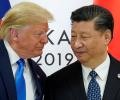
In a statement, the Chinese ministry of commerce said that it would file a lawsuit with the World Trade Organisation against the US for its "wrongful practice," the Global Times reported.
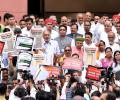
While India today is vastly different from the India of 1975, the need for vigilance against authoritarianism remains the same, asserts Utkarsh Mishra.

The Dhurandhar movies will undoubtedly shape the minds of the audience much more than news reports, court investigations, books and documentaries. But it is worth remembering that Pakistan's irridentist claims against India's national security have succeeded due to strategic planning, diplomacy, and the unsung heroines and heroes across government agencies, not due to a single maverick leader, points out Shweta Desai.But it is worth to remember that Pakistan's irredentist claims against India's national security have succeeded due to strategic planning, diplomacy, and the unsung heroines and heroes across government agencies -- not a single maverick, points out Shweta Desai.

The violations relate to transactions Credit Suisse illegally conducted on behalf of customers from Iran, Sudan, Myanmar and other countries, violating the International Emergency Economic Powers Act and New York state law.

Trump may strike. He may announce productive talks and extend again. He may do both at the same time. Iran will not open the Strait on someone else's terms, so no matter what happens, that problem will remain unsolved. And the IRGC will still be collecting its $2 million toll from every ship bold enough to ask permission to pass.

The LPG squeeze on India's restaurant sector is the quotidian face of a deeper crisis.

'The next two to three weeks will not be decided in Washington.' 'They will be decided in Tehran, in whatever calculation Iran makes about the costs of continued resistance against the costs of appearing to have yielded.'

Alliances fight wars effectively only when they share an endgame. If Israel acted without US knowledge, then the military alliance is operating without real coordination at the level of strategic targeting. Neither picture is reassuring in a war that is no longer regional in its consequences. Prem Panicker continues his must read daily blog on the Gulf War.

Customs regimes can lead to labyrinthine legal disputes. Budget 2026 must recognise that an excessively defensive Customs posture can itself become a trade barrier, point out Mukesh Butani and Shankey Agrawal.

Egypt, Pakistan, Saudi Arabia and Turkey met in Islamabad in what analysts say is the formal opening of a new diplomatic formation that could reshape the post-war regional order. Their immediate goal is a ceasefire; their larger ambition is to ensure that neither Iran nor Israel emerges from this war in a dominant position. Pakistan's foreign minister then flew directly to Beijing and mooted a Chinese role as guarantor of any eventual agreement. Prem Panicker continues his must read daily blog on the Gulf War.

Iran is fighting a different war: Older, slower, and in some ways more dangerous. Iran doesn't need to shoot down an F/A-18. It only needs to make the Strait of Hormuz feel dangerous long enough for insurance markets, shipping companies, and oil futures traders to do the rest. Prem Panicker continues his must-read daily blog on the war in the Middle East.

Taking Kharg would give the US control over virtually all of Iran's oil exports and thus provide significant leverage, notes Prem Panicker in his must read daily blog on the Gulf War. It would also put American troops within range of Iran's remaining missiles, drones, and artillery on a piece of real estate that is just eight square miles in size, and just 15 miles from the Iranian mainland.

The question is no longer whether the war will expand. It has. The next few days will tell us whether the war stabilises around Hormuz or whether the Strait itself becomes the trigger for a far larger rupture. What to watch for over the next 48 hours is simple: Any move by the US toward direct naval control of the Strait; any credible Iranian attempt to disrupt or mine shipping lanes and, critically, whether energy infrastructure in the Gulf continues to be targeted.If those lines are crossed in tandem, the war will no longer be containable within the region.
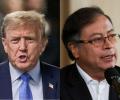
US President Donald Trump has imposed tariffs and a travel ban on Colombia after the South American nation refused to accept two American military planes deporting undocumented Colombians. The move comes after President Trump announced mass deportations of illegal immigrants and warned countries of consequences if they refuse to accept them. Colombian President Gustavo Petro, in a post on X, said that the US cannot treat Colombian migrants as criminals and denied the entry of American planes carrying Colombian migrants into Colombian territory. Trump responded by imposing a 25% tariff on all goods coming into the US, a travel ban and immediate visa revocations on Colombian government officials, and visa sanctions on all party members, family members and supporters of the Colombian government. The US also announced enhanced customs and border protection inspections of all Colombian nationals and cargo on national security grounds. In retaliation, Colombia announced a 25% import tariff on American products.
"These latest so-called 'Liberation Day' tariffs are reckless and self-destructive, inflicting financial pain on Illinois at a time when people are already struggling to keep their small businesses afloat and put food on the table."
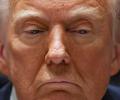
'As negotiations continue, the path forward demands not only diplomatic skill, but also vigilance against legal asymmetries embedded in America's trade playbook.'

'We are profoundly energy-dependent on the Gulf. That dependency must now be redirected towards the United States, because we require American permission to procure oil.' 'We additionally require Iranian permission to acquire oil from that source. So India now has to seek two separate permissions merely to secure its energy supply.' 'Should we be compelled to source from America, or from Venezuela -- which is, in effect, American-controlled supply -- that will inevitably carry a price premium, an elevated shipping cost, and a considerably extended delivery timeline, given the distances involved.'

When everyone has footage and no one can verify it, the loudest voice wins, notes Prem Panicker who begins a daily blog on the War in the Middle East.
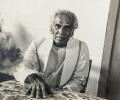
What appeared to be a generous act of friendship was, in truth, a manoeuvre within a much larger strategic game. The United States used the 1962 war not just to aid India but to test how far it could be pulled into the Western fold, points out Dr Kumar.

India emerged from the war militarily bruised and strategically altered. The United States, under the guise of friendship, had succeeded in achieving what open alignment never could: The psychological and political repositioning of India within the Cold War order, points out Dr Kumar.

Years of repression and disappearances have taught Venezuelans, the hard way, not to voice either their anger or their joy, observes Radha Roy Biswas who spent her formative years in Venezuela.
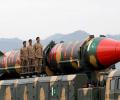
After Donald Trump became president of the United States, he unleashed economic weaponisation, upsetting the old world order, leading to much unrest. If that wasn't all, the threat of an imminent nuclear war was issued by the US, Russia, China, North Korea and Pakistan. In today's fractious times, Dr Paulos Mar Gregorios would have made a dent, notes His Holiness Baselios Marthoma Mathews III.
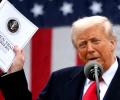
'The real story of 2025 is that India officially stopped being a 'market of the future' and started acting as the world's primary economic engine.'
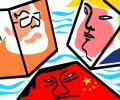
Amid US-China trade tensions and economic vulnerabilities, India must seize the 'China +1' opportunity, deepen reforms, secure FTAs, and globalise its firms for long-term growth, suggests Ajay Shah.
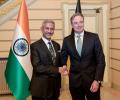
The era where nations thrived through rigid alignments is giving way to an age where the connective State defines power. For India, that era has arrived, points out Dr Nishakant Ojha.

'Our problem is not a budget deficit but a trust deficit. We need to trust our institutions and industries to innovate and lead. That is the way forward for India.'

China appears determined to upgrade Pakistan's military capabilities, sufficient to ensure local parity with India, alerts former foreign secretary Ambassador Shyam Saran.
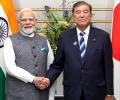
Prime Minister Shigeru Ishiba's sudden resignation after only a year in office has thrown Japan into political turmoil, raising doubts about how the country will handle economic and regional challenges, observes Dr Rajaram Panda.

A deep dive into Trump's new policy and what it means for Indian professionals and companies.

On his 200th birth anniversary, Utkarsh Mishra traces the life, thought, and legacy of Dadabhai Naoroji, the Grand Old Man of India.
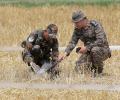
'India enjoys conventional superiority, but nuclear deterrence imposes clear boundaries.'

Sri Lanka's Acting President Ranil Wickremesinghe on Monday imposed emergency giving him sweeping powers ahead of the key election on July 20 to pick a new President as he urged the political parties to put aside differences and form an all-party government, with the Opposition dubbing his decision as an 'undemocratic draconian act'.
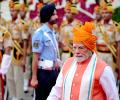
'The Election Commission's involvement in the avoidable SIR controversy has carried a message down to the last voter -- who just does not like it,' observes N Sathiya Moorthy.

TikTok has stressed that its US user data is already stored on US-based servers and backed up in Singapore, and is therefore not subject to Chinese law as some US officials have feared.
